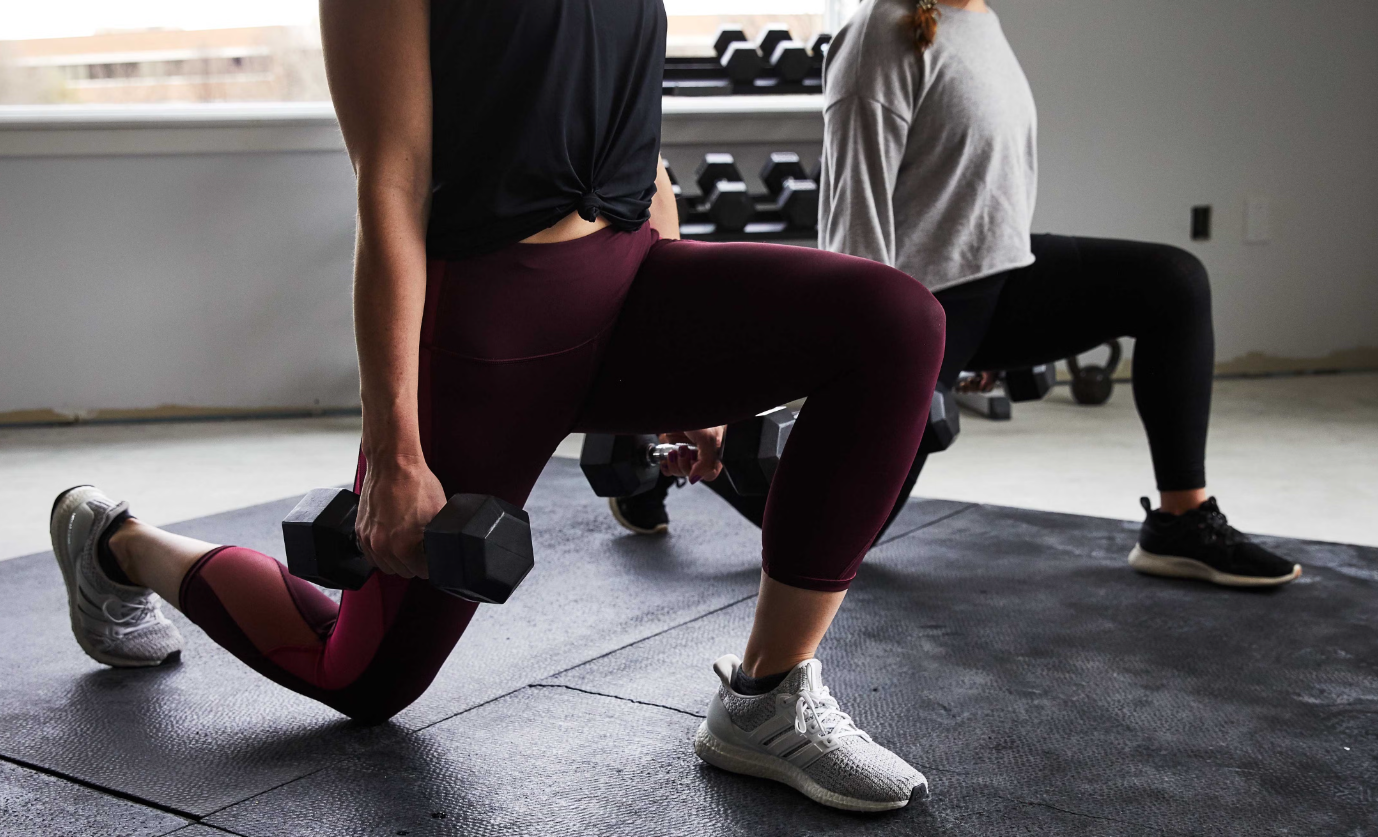
Walking lunges build lower-body strength while challenging balance and coordination. Unlike stationary lunges, they require a forward step with each repetition, forcing the legs and trunk to stabilize the body as weight shifts between the feet.
The walking lunges exercise can be performed with body weight or additional resistance from dumbbells, kettlebells, or a barbell. It fits into strength training, athletic conditioning, and general fitness programs.
The appropriate variation depends on experience, available space, and movement control. Proper technique matters more than distance covered. Stride length, knee alignment, foot placement, and transitions between steps influence muscle loading and stability.
What Are Walking Lunges?
Walking lunges are a unilateral lower-body exercise performed by stepping forward into a lunge, rising through the lead leg, and bringing the opposite leg forward into the next repetition. The front hip and knee bend as the body lowers.
The lead leg then produces most of the force needed to rise, while the trailing leg assists with balance and forward movement. Compared with ordinary walking, deeper knee and hip flexion places greater demands on the quadriceps and glutes. The split stance also challenges pelvic stability during weight transfers.
Walking lunges are commonly used to:
- Build lower-body strength and muscular endurance.
- Train each leg under substantial individual load.
- Improve coordination during forward movement.
- Challenge dynamic balance and trunk stability.
- Add unilateral training to programs built around squats and deadlifts.
They work well as an accessory exercise after heavier compound lifts. Bodyweight repetitions can also be included in warm-ups when the depth and volume suit the individual’s ability. Their main distinction from stationary lunges is the repeated change in foot position, which adds a coordination challenge between repetitions.
What Muscles Do Walking Lunges Work?
The quadriceps and gluteus maximus perform most of the lifting work. Other muscles support hip alignment, ankle control, and trunk stability. Understanding the walking lunges muscles worked helps explain how changes in technique affect the exercise.
Quadriceps
The quadriceps extend the knee as the body rises. During the descent, they work eccentrically to control knee flexion. The lead leg carries much of this demand. Shorter strides generally permit greater forward knee movement, potentially increasing the relative demand on the knee extensors.
Gluteus Maximus
The gluteus maximus extends the hip and helps drive the body upward. Its contribution becomes particularly important when the front hip moves through substantial flexion. A longer stride may increase the relative demand on the hip extensors, especially with a slight forward torso lean. Depth, anatomy, and weight distribution also affect muscle loading.
Hamstrings
The hamstrings assist with hip extension and contribute to joint control, but they are not the primary muscles responsible for lifting the body. Because most hamstrings cross both the hip and knee, their contribution depends on how these joints move together. Walking lunges generally place less direct emphasis on the hamstrings than Romanian deadlifts or leg curls.
Gluteus Medius and Minimus
These muscles help stabilize the pelvis and control thigh position. As weight shifts onto the lead leg, they resist unwanted pelvic movement. Insufficient strength or coordination around the hip may contribute to excessive inward knee movement.
Calves and Core Muscles
The gastrocnemius and soleus help control ankle movement and stabilize the lower leg. Meanwhile, the abdominal muscles, spinal erectors, and other trunk stabilizers resist unwanted rotation, side bending, and excessive forward movement. Added resistance increases muscular demands, although the distribution of effort depends on technique and loading position.
How to Do Walking Lunges With Proper Form
Learning how to do walking lunges begins with controlling individual repetitions before attempting a continuous sequence. Choose a clear path with enough room to move forward and wear stable footwear.
Step-by-Step Walking Lunges Technique
- Stand upright. Position your feet approximately hip-width apart, with your arms at your sides or hands on your hips. Lightly brace your abdominal muscles.
- Step forward. Take a controlled step, keeping some lateral distance between your feet rather than placing them along a single straight line.
- Lower your body. Bend both knees as your hips descend. Keep the front foot planted while the rear heel rises naturally.
- Control knee alignment. Allow the front knee to track in the same general direction as your toes. Moving beyond the toes is acceptable when comfortable.
- Reach a manageable depth. Lower until the rear knee approaches the floor without forcing the position or losing balance.
- Rise through the lead leg. Extend the front knee and hip, pressing through the planted foot. Avoid relying excessively on the trailing leg.
- Continue forward. Bring the rear leg through into the next lunge, alternating sides while maintaining a consistent stride.
Avoid dropping onto the front foot or allowing the torso to collapse during transitions. Beginners can pause briefly between repetitions until balance becomes reliable.
Finding the Right Stride Length
Stride length changes the relative demands on the knee and hip. Shorter steps generally allow more forward knee travel, while longer steps may increase the emphasis on hip extension. Neither position is inherently superior. An excessively short stride can feel cramped.
An overly long step may make pelvic control difficult or encourage excessive pushing from the rear foot. Choose a distance that allows both knees to bend comfortably while the front foot stays planted.
Torso and Foot Position
The torso does not need to remain perfectly vertical. A modest forward lean from the hips is normal, provided the spine stays stable. Maintain enough lateral distance between the feet for balance. Walking along an imaginary tightrope creates unnecessary instability.
Keep the entire front foot in contact with the floor. Pressure may shift naturally across the heel, midfoot, and forefoot during the movement.
Breathing and Tempo
Inhale before or during the descent and exhale while rising. With heavier weights, maintaining abdominal tension helps support trunk stability. Beginners can use approximately two seconds for the lowering phase, followed by a controlled ascent. These walking lunges proper form principles remain useful when progressing to weighted variations.
Benefits of Walking Lunges for Strength and Balance
Walking lunges benefits include lower-body strength development, dynamic balance, and improved control during forward movement.
Lower-Body Strength and Muscle Development
Walking lunges train the quadriceps and glutes through a substantial range of motion. With sufficient resistance, effort, and progressive overload, they can contribute to strength and hypertrophy. Because the lead leg supports much of the load, even moderate dumbbell weights can make a set demanding.
The exercise complements bilateral lifts rather than replacing them. Squats and deadlifts permit different loading strategies, while lunges emphasize individual leg performance.
Balance and Coordination
Each step shifts body weight onto a new base of support. The hips, ankles, and trunk must coordinate to maintain stability. Repeated practice can improve balance and coordination within the movement. Some improvements may transfer to related tasks, although they do not automatically apply to every balance-dependent activity.
Addressing Side-to-Side Strength Differences
Unilateral exercises can reveal differences in strength, mobility, and coordination between the legs. One side may struggle to maintain depth or alignment while the other moves comfortably. Training both legs with appropriate resistance can help address some of these differences. Perfectly identical movement patterns are unnecessary because anatomy and mobility vary. Consistent control and comparable effort are more useful goals.
Hip Mobility and Movement Control
The split stance places the lead hip in flexion while the trailing hip moves into extension. Training through a comfortable range can develop strength and control in these positions. However, walking lunges cannot replace targeted mobility work when restricted ankle or hip movement prevents proper execution.
Athletic Training Applications
Running, jumping, and changing direction involve periods of single-leg support. Walking lunges develop some of the strength and stabilization qualities required during these activities. They can complement athletic programs that also include speed, power, and sport-specific training. However, lunges do not reproduce the movement speeds or forces involved in sprinting and rapid directional changes.
Walking Lunges Variations
Changing the tempo, stride, or loading position allows walking lunges to serve different training purposes.
Paused Walking Lunges
Pause briefly near the bottom of each repetition before rising. This reduces reliance on momentum and makes balance problems or inconsistent depth easier to identify. Paused repetitions are useful for developing control under resistance.
Overhead Walking Lunges
Hold a suitable weight overhead with the elbows extended while stepping forward. This position increases demands on shoulder mobility, upper-back stability, and trunk control. Start with a light implement and avoid the variation if a stable overhead position cannot be maintained.
Front-Rack Walking Lunges
Hold dumbbells or kettlebells near shoulder height instead of at your sides. The front-rack position changes how the trunk supports the load. It increases stabilization demands without altering the basic stepping pattern.
Long-Stride Walking Lunges
Take a slightly longer step while maintaining a planted front foot and controlled descent. This may increase the relative demand on the hip extensors, depending on depth and torso position. Avoid extending the stride so far that pelvic control deteriorates.
Tempo Walking Lunges
Lower for three or four seconds before rising at a controlled pace. The longer eccentric phase increases time under tension and makes technical errors more noticeable. Tempo work can be useful when external resistance is limited, although slower repetitions are not automatically better for muscle growth.
Bodyweight and Dumbbell Walking Lunges
Bodyweight and dumbbell walking lunges follow the same movement pattern. The main differences are resistance and the additional demands that weights place on posture and balance.
Bodyweight Walking Lunges
Bodyweight repetitions provide a practical starting point for learning technique and building muscular endurance. Beginners might start with two sets of six to eight repetitions per leg, resting as needed. Fewer repetitions are appropriate if balance or movement quality deteriorates. Once the exercise feels stable, difficulty can increase through additional repetitions, a greater comfortable range of motion, or external resistance.
Dumbbell Walking Lunges
Hold one dumbbell in each hand with your arms extended at your sides. Keep the shoulders relaxed and avoid swinging the weights. Grip strength and trunk stability may become limiting factors as resistance increases.
A practical starting point is a load that permits eight to twelve controlled repetitions per leg while leaving approximately one to three good repetitions in reserve. Heavier loads may suit shorter sets, while lighter weights allow more repetitions. Neither approach requires sacrificing movement quality.
How to Progress Safely
Increase difficulty when the current version can be completed with consistent depth, balance, and foot placement. Progression can involve:
- Adding a small amount of weight.
- Increasing repetitions or sets.
- Slowing the lowering phase.
- Improving depth within a comfortable range.
- Reducing unnecessary pauses between steps.
Change one major variable at a time. Increasing weight, speed, and distance simultaneously makes technical problems harder to identify. Repeated loss of balance or a noticeable reduction in range of motion usually indicates that the load or set length needs adjusting.
Reverse and Weighted Lunge Alternatives
Walking lunges require enough floor space for repeated forward steps. Other variations may be more practical when space is limited, balance is difficult, or forward stepping causes discomfort.
Reverse Lunges
Reverse lunges begin with a backward step into a split stance, followed by a return to standing. Some lifters find them easier to control because the body does not continue traveling forward. They may also feel more comfortable when the braking demands of forward stepping cause discomfort. Knee loading still depends on stride length, depth, and technique.
Forward Lunges
Forward lunges involve stepping ahead, lowering into a lunge, and pushing back to the starting position. Unlike walking lunges, each repetition returns to the same spot. The lead leg must absorb forward momentum before reversing direction, creating a distinct deceleration demand.
Bulgarian Split Squats
Bulgarian split squats, also called rear-foot-elevated split squats, place the rear foot on a bench or similar support. The front leg performs most of the lifting work. This variation can be loaded substantially without requiring a walking path, although the elevated rear foot increases positioning and balance demands.
Weighted Stationary Lunges
Weighted stationary lunges use a fixed split stance with dumbbells, kettlebells, or a barbell. Because the feet remain planted, attention can stay on the lowering and rising phases. They are particularly practical for progressive resistance training in confined spaces.
Common Walking Lunges Mistakes to Avoid
Technique often deteriorates as fatigue accumulates. Most problems involve foot placement, knee control, or excessive resistance.
Taking Steps That Are Too Short or Too Long
An unsuitable stride can make the bottom position awkward or unstable. Correction: Adjust the distance until both knees bend comfortably and you can rise without excessive shifting or pushing from the rear foot.
Allowing the Front Knee to Collapse Inward
The knee may drift inward when the hip, knee, and foot fail to maintain coordinated control. Correction: Keep the knee moving generally in line with the toes. Reduce resistance if alignment becomes difficult to maintain. Small variations in knee movement are normal. Repeated, uncontrolled collapse is the concern.
Pushing Excessively From the Rear Leg
A strong push from the trailing foot can reduce the relative work performed by the lead leg. Correction: Drive primarily through the front foot while allowing the rear leg to assist naturally with balance and forward movement.
Leaning or Twisting Uncontrollably
A slight forward lean is acceptable. Excessive rounding, side bending, or rotation indicates reduced movement control. Correction: Brace the trunk and reduce the load if posture changes significantly between repetitions.
Rushing Through Repetitions
Excessive speed can turn walking lunges into uncontrolled steps, especially near the end of a set. Correction: Maintain deliberate foot placement and consistent depth. Increase speed only when balance remains reliable.
Using More Weight Than Necessary
Heavy dumbbells may interfere with stride length, posture, and range of motion. Correction: Select a challenging load that still permits controlled repetitions.
Forcing Depth Despite Discomfort
The rear knee does not need to touch the floor. Pushing into a painful position offers no advantage. Correction: Use a comfortable range and increase depth gradually as strength and control improve. Persistent or sharp pain warrants stopping the exercise and seeking an appropriate professional assessment.
Walking Lunges vs Stationary Lunges
Walking and stationary lunges train many of the same muscles, but their movement patterns create different demands.
| Feature | Walking Lunges | Stationary Lunges |
| Movement | Repeated forward steps | Fixed split stance |
| Balance | Dynamic weight transfers | More stable foot position |
| Main muscles | Quadriceps and glutes | Quadriceps and glutes |
| Coordination | Greater stepping demands | Focus on lowering and rising |
| Space required | Open walking path | Small exercise area |
| Loading | Balance may limit resistance | Often easier to load consistently |
| Common use | Strength, coordination, endurance | Strength, hypertrophy, technique |
Which Exercise Is Better for Strength?
Both exercises can develop lower-body strength through progressive overload. Stationary lunges are often easier to load consistently because the feet remain planted. Walking lunges introduce coordination demands that may become limiting before the target muscles reach their full strength potential. Neither is inherently superior for hypertrophy. Effort, training volume, range of motion, and progression matter more.
Which Is Better for Balance?
Walking lunges involve repeated changes in the base of support, making them useful for practicing balance during forward movement. Stationary lunges still challenge stability, particularly with heavy weights, but remove the need to coordinate consecutive steps.
Choosing Between the Two
Walking lunges suit programs combining leg strength with dynamic balance and coordination. Stationary lunges are often preferable when space is limited or consistent external loading is the priority. Both can appear in the same program when they serve distinct training purposes.
FAQ
Are walking lunges good for building glutes?
Yes. Walking lunges train the gluteus maximus through hip extension and can support muscle growth when performed with sufficient resistance and effort. Progressive overload and a comfortable range of motion matter more than exaggerating stride length.
How many walking lunges should beginners do?
Two sets of six to eight repetitions per leg provide a manageable starting point for many beginners. Begin with body weight, rest when necessary, and stop if movement quality deteriorates. Repetitions can increase as control improves.
Should the knee go past the toes during walking lunges?
The front knee can move beyond the toes. This is a normal part of knee flexion and is not inherently dangerous. Appropriate knee travel depends on ankle mobility, stride length, anatomy, and comfort. Controlled movement matters more than enforcing an arbitrary position.
Are walking lunges better than squats?
Neither exercise is universally better. Squats train both legs simultaneously and generally allow heavier total loads. Walking lunges place greater individual demands on each leg and require more coordination. Both contribute to strength and hypertrophy.
Can walking lunges be done every day?
Light bodyweight lunges may be manageable on consecutive days, but demanding sets require sufficient recovery. For many recreational lifters, two or three weekly lower-body sessions that include walking lunges are practical when total training volume is managed appropriately.
Do walking lunges work the hamstrings?
The hamstrings assist with hip extension and stabilization, but the quadriceps and gluteus maximus perform most of the lifting work. Romanian deadlifts and leg curls are better choices when direct hamstring development is the priority.